
Let's Talk about Food for a Second
Because everyone else seems to be...

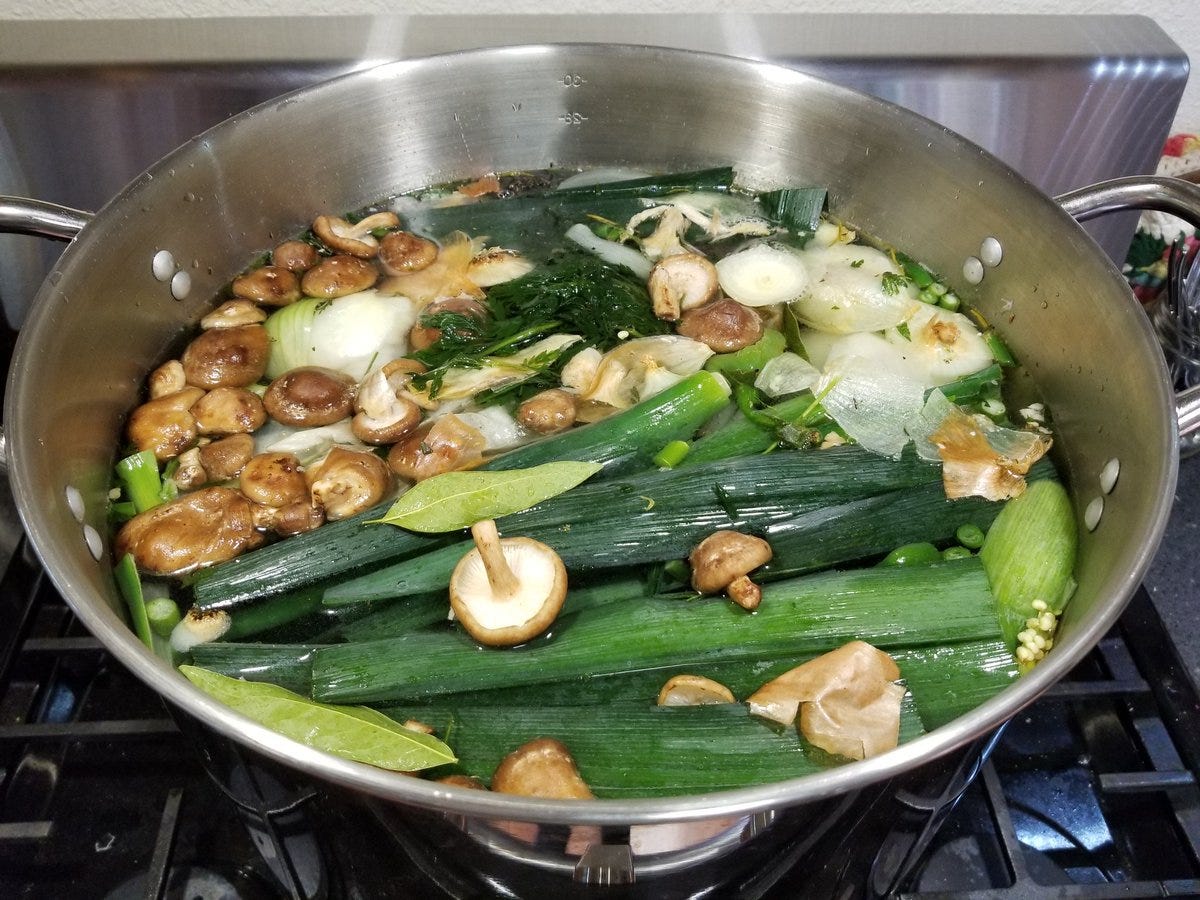
OK, I threw out a note the other day about how the current narrative about food and inflation and possible shortages was terrifying and that terrifying narrative is BAD and makes it hard to make good choices.
Let’s dig in, shall we?
My process for magical risk management is cyclical (because of course is it). And the primary risk cycle is: Assess » Respond » Adapt
This is true for any kind of risk (though there are advanced techniques for highly entangled risks).
We’re going to start with assessment, because people get derailed right at the start and end up never doing anything at all.
Assessment
So, you’ve been seeing the stories about how our food system might be impacted by (insert really scary thing right here). You might also be remembering that time during Covid that you went to the grocery store and there weren’t actually many groceries there. Or maybe you remember an earlier time in your life when you went to the cupboard and the cupboard was bare.
Those are emotional and fear-based assessments and they can lead you astray in making good risk management decisions.
Instead, we need to assess risk from a place of calm coherence, not fear and anxiety. How?
Let’s start by reviewing the current facts based on your personal and first hand experience:
You know the cost of purchasing food has increased
You know your budget for food expenses
You know what your household eats by choice (taste, preference)
and necessity (allergies, religious rules)You know whether you are a frequent cook or more of a microwave dinner person
You know what’s in your pantry and freezer right now (and if you don’t know that, well, that tells you something about yourself as well)
You know what food resources you currently have (from living in a food desert to living on a farm)
That’s your landscape.
Now, consider the IDEA of food resourcing and risk (without spiraling - maybe do a little breathing exercise and recite the Litany Against Fear):
You and your family need to eat
That food comes from someplace
If food wasn’t as readily available for whatever reason, that would be a risk
It’s pretty clear, right? Food is important. Because at the systemic level, it doesn’t matter WHY food is scarce, only that it is. Keep that in mind, because you can waste weeks of your life going down research rabbit holes without ever DOING anything. Fear porn is still porn (in that it’s distracting and can be addictive, not that it necessarily gets you off).
Now, instead of spending time assessing possible sources of the risk of food insecurity, spend that time assessing your EXPOSURE to the risk.
This is your personal calculus, and as I’m always saying you have to do your own math depending on your landscape.
For example, someone in the suburbs might be smugly thinking that they have a lot less risk exposure compared to someone in a big metropolis apartment… but maybe not. After all, a pesticide sprayed lawn isn’t going to sprout tomatoes overnight and the local big box store might be the only game in town for food and gardening supplies if trucks can’t get to you. If you don’t actually know how to garden in your particular area that’s additional exposure. And that big suburban house isn’t very useful if you don’t practice smart pantry management. Not to mention that a suburb in Arizona has very different math than one in Minnesota. On the other hand, your particular suburban kingdom might be able to supply you with all the protein, potatoes, and green superfood you need.
The city, on the other hand, likely has an extremely efficient transportation infrastructure for moving food (railroads!), city leaders have more sway in getting people supplies they need, and the city already has a lot more food in it (when every restaurant closed during Covid, all that food went into the local food system in various ways - from reselling to dumpster diving). Plus there are all kinds of sub-communities who have their own food resourcing. I guarantee you, you will do better in a city if you have good relationships with your immigrant neighbors. And if you volunteer at a food bank or work in the food industry, that impacts your math as well. Still, being hungry surrounded by a million other hungry people has its problems too.
But it depends entirely on your INDIVIDUAL situation.
Answer the following questions in a clear eyed way (note that they contain various permutations of food security risk without diving into the fear porn):
In a serious emergency, do you have enough nonperishable, easy to make (if the power were out), food and water for:
Three days per household member? (Red Cross recommendation)
Two weeks per household member? (Oregon Department of Emergency Management recommendation)
If food prices continue to increase:
Would your budget support it?
Would you be able to buy fewer groceries without being hungry?
Would you even notice? Congratulations, you have mitigated this risk.
If food became scarce in the store:
Would you still be able to eat?
For how long and how differently?
Would you be impacted at all? Congratulations, you have mitigated this risk.
If food became scarce outside of the store:
Would you still be able to eat?
For how long and how differently?
Now you know your basic risk exposure to this risk. And you know it regardless of why the risk might occur. Yes, food scarcity due to fuel and fertilizer rationing is different than scarcity due to a drought. Scenario planning does have a place in risk management.
But in the meantime, if you have risk exposure, you can take steps to reduce that exposure regardless of inflation or weather or the Strait of Hormuz. You don’t control those things, but you aren’t without agency.
In fact, you are the sovereign of your own self and your tiny sphere. And you wield real power in your household and your close community. And when you empower yourself to mitigate your own risks, you not only become more secure, you feel more powerful!
You don’t have to be afraid.
When you assess risk correctly, responses will immediately start to become apparent. The big trick is responding in a way that a) doesn’t create additional risk (please don’t avoid paying your mortgage to buy emergency food) and b) integrates magic into your plan. But that’s the next step.
I’ve spent over a decade jailbreaking corporate risk and crisis management to be a) less stupid b) more agile and c) way more magical. If you want to learn my methods first hand, join me. You won’t do it alone. We’ll do it together.